



Many businesses are still paying for ISDN simply because it is familiar. That familiarity comes with hidden costs that do not show on a single invoice. Equipment ages, channels are fixed and scaling requires engineer visits. Business SIP Trunking is the modern alternative that moves voice onto your existing data network, reduces ongoing charges and makes the phone system work the way your business works today. This article explains what changes, what you save and how to switch without disruption.
What ISDN really costs your business
Staying on ISDN can be expensive in several ways. You pay per channel and for line rental. Hardware such as ageing PBX units needs maintenance or replacement. Flexibility is limited, so seasonal demand forces you to overprovision. Add to that the risk of supplier consolidation and the scheduled ISDN switch-off in many markets, and the true cost becomes clear: more operational overhead, less agility and potential downtime when parts are no longer supported.
What is SIP trunking in plain terms
SIP trunking sends calls over the internet instead of dedicated copper circuits. A SIP trunk connects your phone system to the public telephone network using internet protocol rather than physical channels. The approach works with many existing telephone systems and can be layered on top of a hosted platform. For businesses that want to modernise without a full rip-and-replace of their Phone System, SIP trunks are often the best first step.
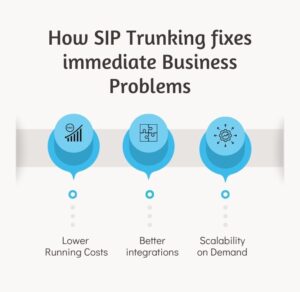
How SIP trunking fixes immediate business problems
- Lower running costs: You pay for call minutes and channels in a more flexible way, often at lower rates than ISDN.
- Scalability on demand: Add or remove capacity quickly when your team grows or during seasonal peaks.
- Support for remote and hybrid work: Phones and softclients can be routed to remote users without complex rewiring.
- Built-in resilience: Traffic can fail over to alternative numbers or sites during an outage.
- Better integrations: SIP makes it simpler to connect CRM systems, call recording and analytics.
Use this list when you prepare a business case for change. If you need to include technical detail for IT, add the network diagram and bandwidth estimates.
SIP trunking features to look for
When assessing suppliers compare the following sip trunking features as standard:
- Concurrent call capacity and easy scaling
- Geographic number support and number porting assistance
- Redundancy and geographic failover options
- Encryption and fraud protection
- SIP registration and compatibility with your PBX or hosted system
- Reporting and call analytics
- Clear SLAs for uptime and response times
Choosing a provider with the right mix of these features reduces migration risk and preserves call quality.
ISDN versus SIP: a practical comparison
A short, direct comparison helps decision makers.
| Area | ISDN | SIP trunks |
| Scalability | Fixed channels | Elastic capacity |
| Cost model | Channel rental plus calls | Flexible plans, lower call rates |
| Remote working | Limited | Designed for distributed teams |
| Integration | Often limited | Native integrations with CRM and cloud apps |
| Resilience | Single-site risk | Multi-route failover options |
If your business uses multi line business phone systems today, you can often swap the underlying circuits for SIP without changing handsets. That keeps user disruption to a minimum.
The financial case: what you can realistically save
Savings vary by business size and call profile. Typical gains include:
- Lower monthly rental and per-minute charges
- Reduced maintenance costs for legacy PBX hardware
- Less capital expenditure when choosing a hosted route rather than a full hardware refresh
- Lower international and mobile call costs if the provider offers competitive routing
Compare a three-year total cost of ownership for ISDN versus a SIP solution that may include High-Speed Broadband, host fees or a one-off migration charge. In many cases the operational savings exceed the migration cost within 12 to 24 months.
Real-world use cases and where SIP excels
SIP trunking for SMEs is particularly effective when an organisation needs to scale quickly or support remote staff. Retail outlets benefit from lower call rates and easier multi-site management. Professional services firms gain from CRM integration so every inbound call is matched to client records. Organisations that already use a Hosted VoIP Business Phone System will find SIP trunks simplify billing and centralise management.
Migration without disruption: step by step
- Audit current setup: Document existing Telephone Systems, numbers and call volumes.
- Check compatibility: Confirm your PBX supports SIP trunks or plan a hosted migration.
- Plan bandwidth: Ensure your internet link supports voice plus data, or consider Dedicated Leased Lines for critical sites.
- Choose a pilot: Start with one site or a small group to prove configuration and quality.
- Number porting: Coordinate porting windows with your new supplier to keep numbers active.
- Parallel run: Run ISDN and SIP in parallel until you are confident in call quality and routing.
- Go-live and monitor: Monitor call quality, jitter and packet loss closely in the first 72 hours.
These steps keep disruption low and make rollback simple if an unexpected issue arises.
Security, compliance and call fraud prevention
Voice traffic should be treated like any other sensitive data. Key controls include session border controllers, TLS or SRTP for encryption, strict authentication for SIP registration and real-time monitoring to detect unexpected call patterns. Make sure the provider supports compliance with regional telecom regulations and retains call data according to your company policy.
Checklist: is your business ready for SIP?
Tick these items before committing.
- Reliable internet connection or a plan to upgrade.
- A SIP-compatible PBX or appetite to move to hosted services.
- Clear understanding of current call volumes and patterns.
- Supplier that offers number porting and failover.
- Budget for any one-off migration costs and testing.
- Decision on whether to use a Dedicated Leased Lines option for high availability.
If you have High-Speed Broadband in place and the right PBX, the move can be quick and cost effective.
Vendor notes and an example provider mention
Many reputable providers offer competitive SIP packages. Some larger carriers bundle SIP alongside mobile and broadband services. For example, packages that include unlimited mobile options such as Voda Unlimited or integrated broadband bundles can simplify vendor management and sometimes deliver lower combined costs. Always compare total cost, SLAs and the migration support offered.
Almens Consult: planning your SIP upgrade the right way
Almens Consult can help with an independent review of your telecom estate. Services commonly include a cost-benefit analysis, an assessment of SIP trunking features that matter to your business, assistance with provider selection and a migration roadmap tailored to minimise downtime. Independent advisers often save money by identifying hidden contract terms or unnecessary services in legacy telephone setups.
Stop paying for yesterday’s technology
If you are still paying for ISDN, now is the time to act. Business SIP Trunking delivers cost savings, flexibility, resilience and better support for modern working patterns. With careful planning, the migration is manageable and low risk. Start with a short audit of your current Telephone Systems and internet capacity, compare providers for features and SLAs, and consider expert help for migration planning. Your next move could be lower bills, fewer headaches and a phone system that actually helps your team get work done. Business SIP Trunking is not just a technology swap. It is a strategic upgrade for the way companies operate today.
Quick FAQs for Decision Makers
Can SIP trunking scale with my business?
Yes, SIP trunking scales instantly, letting you add or remove concurrent call channels and geographic numbers through your provider without installing new physical lines.
What is the best SIP trunk provider UK?
The best UK provider depends on your business size and needs; prioritise uptime SLAs, porting support, security features and clear pricing when you compare options.
What is the future of SIP trunking?
SIP trunking will continue to replace ISDN as voice moves to the cloud, with stronger security, deeper CRM and UC integrations and smarter routing and analytics.
Are there any free SIP trunks?
Free SIP trunks exist for testing and very low volume use, but reliable business SIP trunking requires paid services that include support, SLAs and fraud protection.
Which company is the best for SIP?
The best company is the one that matches your technical requirements, offers transparent SLAs and migration support, and lets you trial service before you commit.