



Most property owners do not think about their electrical systems until something forces them to. A tripped circuit breaker, a flickering light, or a socket that stops working gets temporary attention, then fades back into the background once it is fixed. The bigger picture, whether the electrical installation is actually safe, compliant, and capable of meeting the property’s current and future demands, rarely gets examined unless something serious happens.
That approach is understandable. Electrical systems are largely invisible, and when they work, there is no obvious signal to prompt a review. But the risks of leaving an electrical installation unexamined for years are not invisible. They show up in insurance rejections, compliance failures, fire risks that develop without anyone noticing, and the kind of expensive remediation that is always harder to fund when it arrives without warning.
Quality electrical services address these risks systematically, keeping properties safe, legal, and efficient throughout their operational life.
What Quality Electrical Services Actually Mean
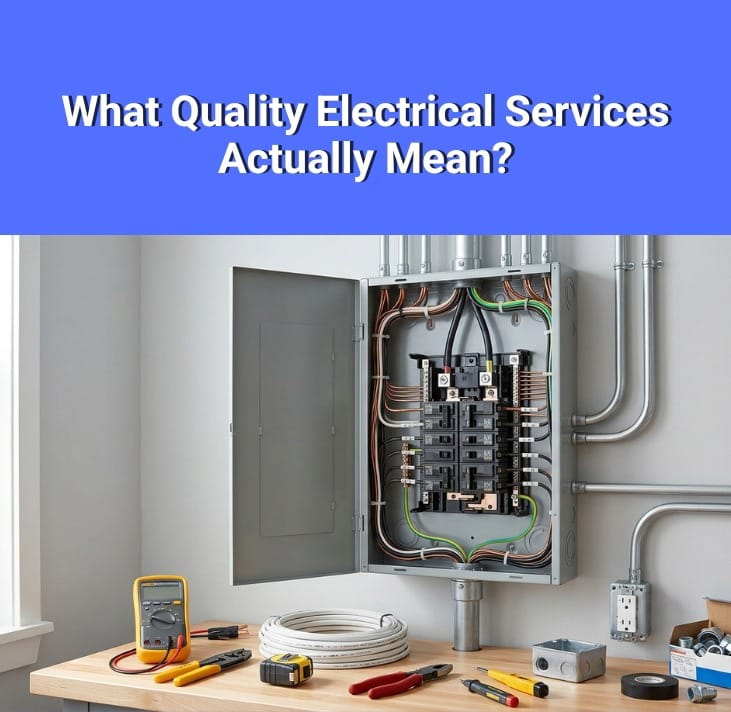
Electrical services for property owners cover a broader scope than most people realise. The term includes the installation of new electrical systems, the testing and inspection of existing ones, the maintenance and repair of electrical equipment, and the specialist engineering work that assesses whether a property’s electrical infrastructure is safe and fit for purpose.
For domestic properties, this typically covers consumer unit installation, circuit additions, socket and lighting work, and the Electrical Installation Condition Report that certifies the installation’s safety. For commercial and industrial properties, the scope extends into power system design, energy management, arc flash assessment, and the range of electrical engineering services that support complex electrical infrastructure.
In both cases, the common thread is the assurance that the electrical systems in a property work correctly, comply with the relevant standards, and protect the people who live or work in them.
Reason One: Electrical Services Protect People From Serious Harm
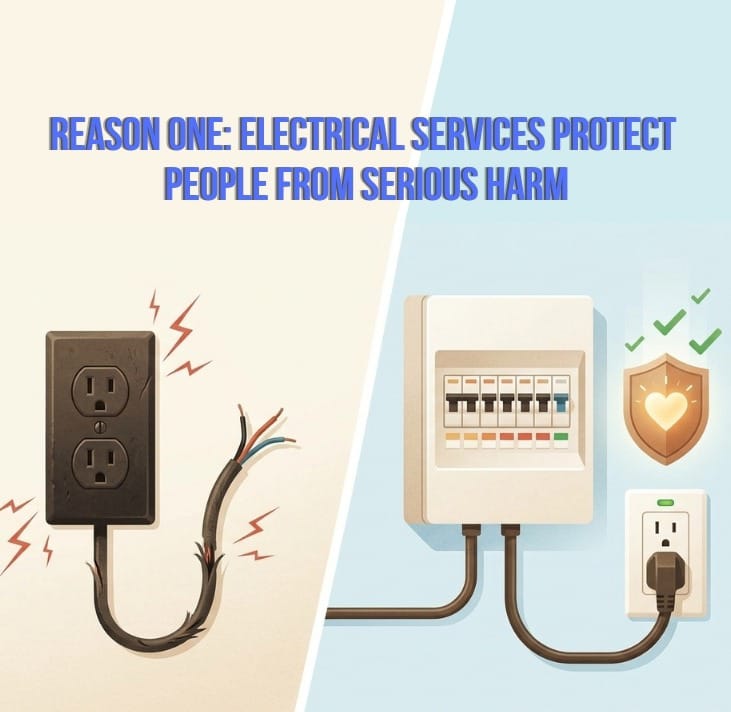
This is the most fundamental reason to invest in quality electrical services, and it is worth stating plainly. Poorly maintained or incorrectly installed electrical systems injure and kill people every year in the UK. Electrical fires are responsible for a significant proportion of house fires. Faulty wiring and inadequate protection cause electrocution incidents that are entirely preventable with proper maintenance.
Quality electrical services include the safety checks that identify developing hazards before they cause harm. A competent electrician or electrical engineer who inspects an installation properly will identify overloaded circuits, inadequate earthing, missing residual current protection, and other issues that represent genuine risks to the people in the property.
The cost of addressing these issues is always lower than the cost of not addressing them.
Reason Two: Compliance With UK Law Is Not Optional
Every property in the UK must meet specific legal requirements for electrical safety. The specific requirements vary depending on whether the property is residential, commercial, or industrial, but the legal obligation to maintain electrical systems safely applies across all categories.
For commercial and industrial properties, the Electricity at Work Regulations 1989 place a direct legal duty on employers to ensure electrical systems are safe. Non-compliance can result in prosecution, unlimited fines, and in serious cases, custodial sentences for individuals found responsible.
For residential landlords in England, the Electrical Safety Standards in the Private Rented Sector Regulations require an Electrical Installation Condition Report every five years and the remediation of any C1 or C2 deficiencies found. Landlords who fail to comply face fines of up to £30,000 per breach.
Building regulations apply when electrical installation work is carried out. Work must either be carried out by a competent person registered with a Part P scheme or notified to the local authority for inspection. Uncertified electrical work creates problems at the point of property sale and in insurance claims.
Quality electrical services ensure that properties meet these requirements and that the documentation to demonstrate compliance is in place.
Reason Three: Electrical Services Protect Your Insurance Position
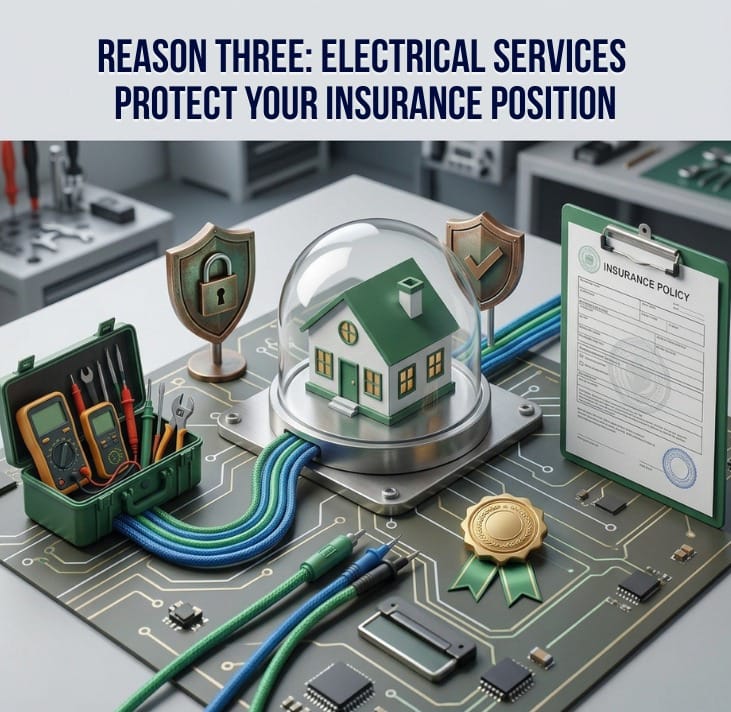
Property insurance depends on the property meeting basic safety standards. When an insurance claim follows an electrical fire or incident, the insurer will examine the maintenance record and compliance history of the electrical installation. A property without a current EICR, with known deficiencies that were never remediated, or with uncertified electrical work carried out by unqualified persons, faces a very difficult claims process.
In serious cases, insurers decline claims entirely on the basis that the policyholder failed to maintain the property in a safe condition. The cost of a denied claim, in property damage, business interruption, or liability, is always far higher than the cost of the electrical services that would have prevented it.
Regular inspection and maintenance, carried out by competent electrical professionals and documented correctly, is the protection that keeps insurance coverage meaningful.
Reason Four: Professional Electrical Engineering Services Improve Energy Efficiency
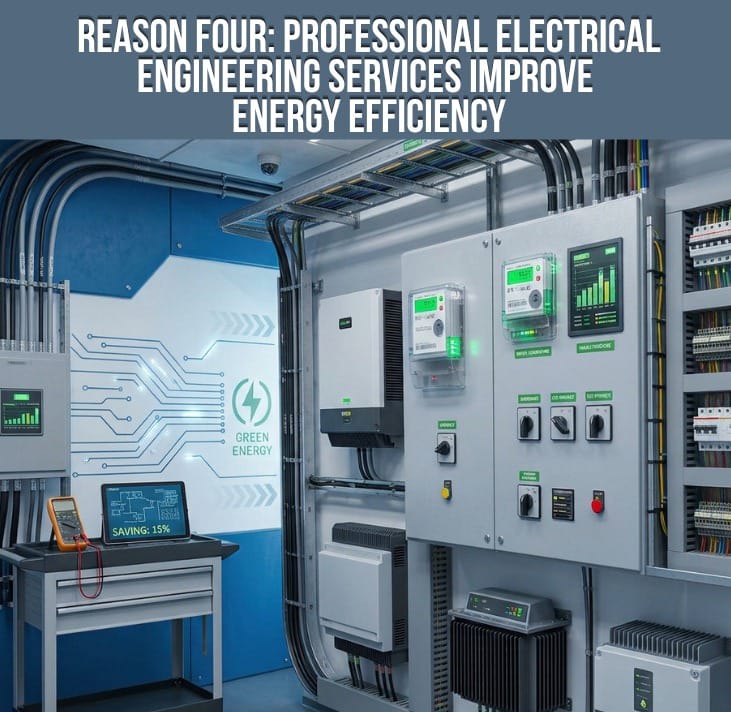
Quality electrical engineering services for commercial and industrial properties go well beyond safety. They identify where energy is being wasted and specify the improvements that reduce consumption and cost.
A professional energy audit examines the electrical systems in a property at the circuit level and identifies:
- Motors and equipment running at fixed speed where variable speed drives would reduce consumption
- Lighting systems using older technology where LED upgrades would cut energy use
- Poor power factor generating charges that a correction system would eliminate
- Equipment running outside operating hours because controls are inadequate
- Circuits carrying more current than they should because the system has grown beyond its original design
| Energy Efficiency Measure | Typical Energy Saving | Typical Payback Period |
|---|---|---|
| LED lighting upgrade | 50 to 70% on lighting energy | 2 to 4 years |
| Variable speed drives on motors | 20 to 50% on motor energy | 1 to 3 years |
| Power factor correction | 5 to 15% on electricity bills | 1 to 2 years |
| Sub-metering and monitoring | 5 to 20% through better decisions | Under 1 year |
| Smart controls and timers | 10 to 25% on controlled loads | 1 to 2 years |
For commercial property owners and occupiers facing high energy costs, these improvements are not optional extras. They are sound investments that pay back quickly and continue delivering returns for years.
Reason Five: Electrical Services Support Property Value and Saleability
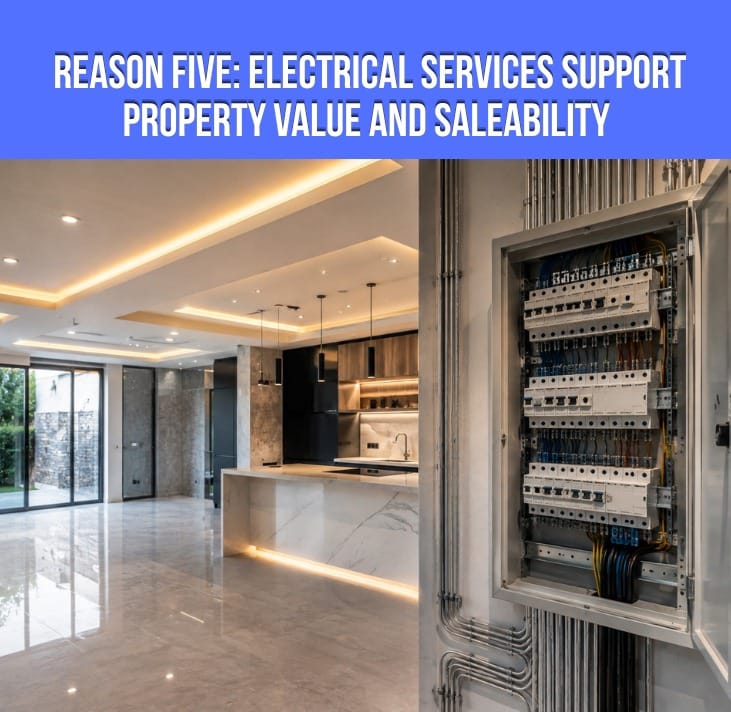
When a property is sold or let, the electrical installation becomes a material consideration for buyers, tenants, and their solicitors. An up-to-date EICR, documentation of properly certified electrical work, and evidence of regular maintenance all contribute positively to the transaction.
Conversely, a property with an outdated installation, an expired EICR, or uncertified work will face enquiries and delays at the point of sale or letting. In some cases, a buyer’s mortgage lender will require remedial work before releasing funds. In commercial transactions, due diligence processes examine electrical compliance records specifically.
Properties that have been maintained to a consistently high standard by quality electrical services retain and enhance their value. Properties that have been neglected face remediation costs at exactly the moment when the disruption is hardest to manage.
Reason Six: Quality Electrical Services Prevent Costly Emergency Repairs
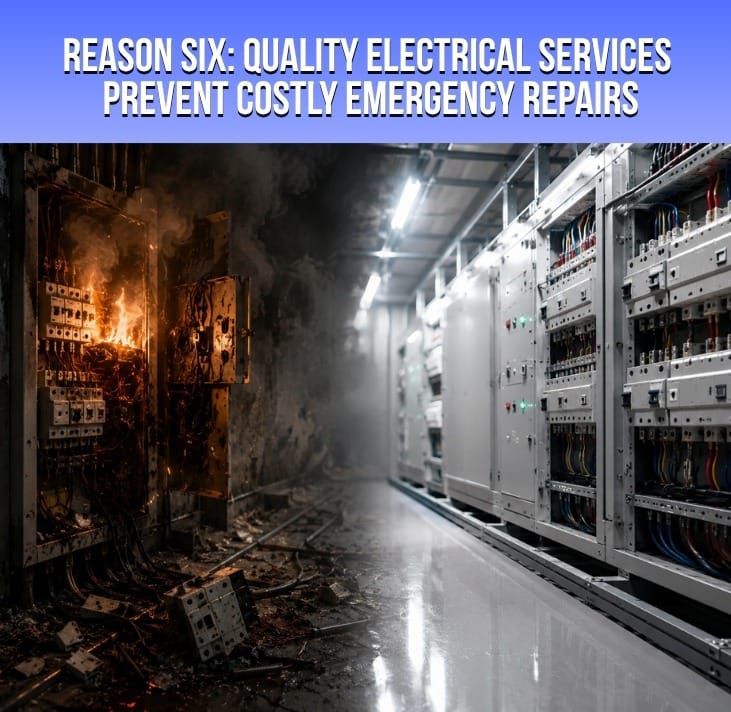
Emergency electrical repairs are expensive in multiple ways. The callout costs are high. The disruption to residential or business operations is significant. And the underlying cause, which in most cases is a developing fault that could have been identified during routine maintenance, could have been addressed at a fraction of the cost if it had been caught early.
Regular electrical maintenance by qualified professionals catches developing problems before they become failures. A loose connection that generates heat will eventually cause a fault. An overloaded circuit will eventually trip at an inconvenient moment or, worse, develop into a fire risk. A failing protective device will eventually fail to operate when it is needed.
Quality electrical services that include scheduled maintenance reduce the probability of these events occurring. When problems do arise, they are caught early and addressed at planned cost rather than emergency cost.
Reason Seven: Electrical Engineering Services Enable Future-Proofing
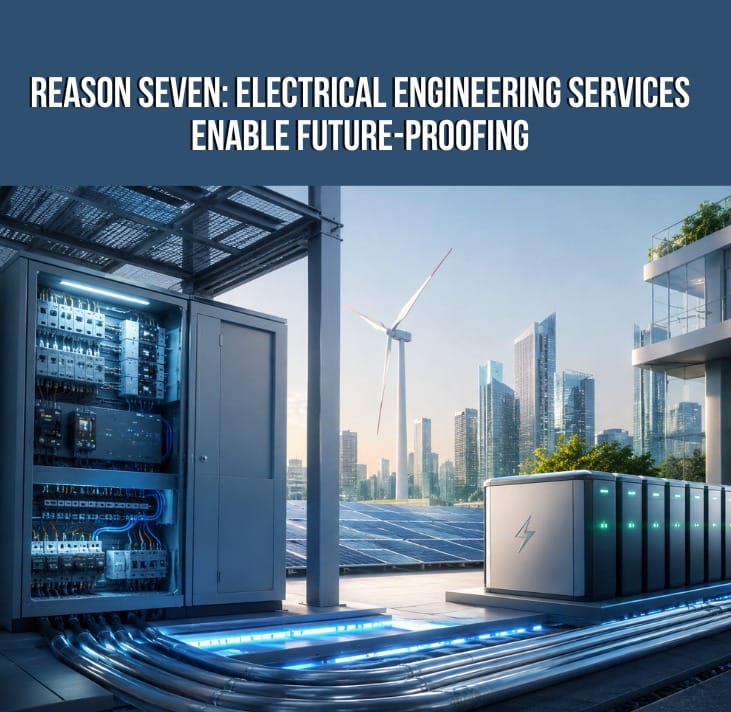
| Property Change | Electrical Service Required | Engineering Consideration |
|---|---|---|
| Adding EV charging | Load assessment, supply upgrade if needed | Existing supply capacity, load management |
| Installing heat pump | Circuit design, consumer unit review | Diversity, additional demand on supply |
| Solar PV installation | G100 connection study, protection design | Export limiting, protection coordination |
| Battery storage | BESS design, fire strategy, integration | Thermal management, grid interaction |
| New commercial equipment | Load flow analysis, protection review | Supply capacity, fault level adequacy |
How Almens Consult Can Help Your Property

Almens Consult provides quality electrical services and specialist electrical engineering services for commercial, industrial, and residential property owners and managers across the UK. The team carries out Electrical Installation Condition Reports, energy audits, arc flash assessments, power system studies, and compliance reviews. It provides engineering support for renewable energy integration including solar PV, battery storage, and EV charging, and it conducts independent reviews of contractor proposals for significant electrical work. Working without financial ties to equipment suppliers or installation contractors, Almens Consult gives property owners engineering advice that is based on their genuine needs rather than on a commercial interest in a particular outcome. Whether the requirement is an urgent compliance issue, a planned energy improvement programme, or a strategic review of electrical infrastructure ahead of a property development or transaction, Almens Consult provides the technical expertise and the clear communication that good electrical services should always include.
Investing in Electrical Services Is Investing in the Property Itself
The seven reasons covered in this article share a common theme. Quality electrical services are not a cost that property owners incur reluctantly. They are an investment in the safety, value, efficiency, and longevity of the property itself. The properties that are maintained well, inspected regularly, and improved systematically consistently outperform those that are not, in safety record, in running cost, in insurance reliability, and in market value.
The starting point for any property owner who has not recently had a professional electrical review is a current EICR. From there, the specific priorities, whether compliance, energy efficiency, infrastructure capacity, or preparation for new technology, become clear and can be addressed in a planned, cost-effective way.

FAQs
How often should a commercial property have an electrical inspection?
Commercial and office properties should have an Electrical Installation Condition Report every five years. Industrial premises should be inspected every three years. Licensed premises such as pubs and restaurants require annual inspection. Older or high-risk installations may need more frequent assessment.
What is an EICR and why does my property need one?
An Electrical Installation Condition Report is the formal document produced following periodic inspection and testing of a fixed electrical installation. It assesses the installation against BS 7671, identifies deficiencies, and classifies them by severity. It is required by law for private rental properties in England and is increasingly required by commercial insurers as a condition of cover.
Can I do electrical work myself on my property?
Minor work such as like-for-like replacement of fittings is generally permitted. More significant work, including new circuits, consumer unit work, and electrical installation in special locations such as bathrooms and kitchens, must be carried out by a competent person registered with a Part P scheme or notified to the local authority for inspection. Uncertified work creates compliance and insurance problems.
What is the difference between electrical services and electrical engineering services?
Electrical services generally refers to installation, maintenance, testing, and repair work on electrical systems. Electrical engineering services covers the more technical design, analysis, and assessment work, including power system studies, energy audits, arc flash assessment, and compliance engineering. Many properties need both.
How do I know if my electrical installation is safe?
The most reliable way to assess the safety of your electrical installation is through a professional EICR carried out by a competent electrician or electrical engineer. Visual signs that suggest a problem include frequently tripping circuit breakers, burning smells near sockets or panels, flickering lights, and discolouration around switches or outlets, but many serious faults have no visible symptoms.
What does an energy audit involve and is it worth it?
A professional energy audit examines your electrical systems and energy consumption at the circuit level, identifies waste, and quantifies the savings available from specific measures such as LED lighting, variable speed drives, and power factor correction. For commercial and industrial properties with significant energy bills, an audit typically identifies savings that pay back its cost within a few months.
Do I need electrical engineering services for EV charging installation?
For anything beyond a standard domestic charger, yes. Commercial EV charging installations require a load assessment to confirm the existing supply can handle the additional demand, and may require supply upgrades, load management systems, and distribution design. Getting this engineering right before installation prevents costly problems discovered too late.
What are the penalties for not maintaining electrical compliance on a commercial property?
Failure to comply with the Electricity at Work Regulations 1989 can result in prosecution by the Health and Safety Executive, with unlimited fines and in serious cases custodial sentences for responsible individuals. Residential landlords in England who fail to meet EICR requirements face fines of up to £30,000. Insurance claims following incidents on non-compliant installations may also be rejected.